Are Infrared Saunas Safe?
Are infrared saunas safe for most healthy adults when used at moderate heat for short sessions? By and large, yes, if you follow basic precautions, start low, hydrate, and stop if you feel dizzy or unwell.
On this page (11 sections)
- Is an infrared sauna safe for healthy adults?
- How does an infrared sauna work, and why does that matter?
- What are the benefits and risks to weigh?
- Are infrared saunas good for your health, or just relaxing?
- How does an infrared sauna compare with a traditional sauna?
- What precautions should you take before each session?
- What are the signs of overheating, and what should you do?
- How should you clean and maintain an infrared sauna?
- What safety features should you look for when buying?
- What are the infrared sauna use guidelines for safer sessions?
- Final thoughts on whether infrared saunas are safe
Are infrared saunas safe for most healthy adults when used at moderate heat for short sessions? By and large, yes, if you follow basic precautions, start low, hydrate, and stop if you feel dizzy or unwell.
The safety question for an infrared sauna is mostly about heat load, time, and your own health. Infrared heat warms you directly, so you can sweat at a lower air temperature than in a traditional sauna.
That can feel gentler, but it does not remove the risk of overheating.
Is an infrared sauna safe for healthy adults?
For healthy adults, an infrared sauna is generally safe when heat and time stay moderate.
The main risks are dizziness, nausea, dehydration, and overheating, and they rise with higher heat and longer time.
Start with 10 to 15 minutes at a low setting. Leave if you feel dizzy, nauseated, or too hot, then cool down slowly and drink water.
Talk with a doctor first if you have a heart condition, low blood pressure, a history of fainting, or are pregnant.
How does an infrared sauna work, and why does that matter?
An infrared sauna heats your body with infrared light instead of heating the air first.
That is why the room can feel cooler while you still sweat a lot, as [How Does an Infrared Sauna Work?
Explained](/how-does-an-infrared-sauna-work/) explains. Lower air heat can feel easier to tolerate, but it can also lead you to stay in too long.
Sweat rate is not a safety gauge, since heavy sweating still means your body is working hard to cool down. Think of the temperature dial as a dose control, with low heat for a short time as the smaller dose.
What are the benefits and risks to weigh?
The trade-off is real. Our guide to infrared sauna benefits and disadvantages lays out both sides, including comfort, relaxation, and common side effects of heat exposure.
Many users report relaxation, warm muscles, and a pleasant sweat after a session. On the risk side, you may feel lightheaded, get a headache, or recover more slowly if you overdo heat, time, or dehydration.
Infrared heat does not make those risks disappear just because the air feels mild. Your body still has to shed heat, and that takes fluid and circulation.
Are infrared saunas good for your health, or just relaxing?
Many people ask are infrared saunas good for your health because they want more than a warm room. The honest answer is that relaxation and regular sweating are the clearest near-term gains for most users.
Do not treat a sauna as a treatment for a medical condition. It may fit into a general wellness routine, but it does not replace medical care.
If pain, sleep problems, or other symptoms persist, see a doctor.
Do infrared saunas really work for sore muscles?
Sore muscles are a common reason people buy a unit. Our piece on do infrared saunas really work looks at the evidence behind the most common claims.
For muscle recovery, gentle heat and rest matter more than a high temperature. A short, moderate session after a workout can feel good, but avoid deep heat right after a hard effort if you feel dizzy or unusually tired.
What should muscle recovery buyers look for?
Recovery focused buyers should look for even heat, a timer, and a low starting temperature. Those features help you keep a session short and controlled, which is safer than chasing maximum heat.
Our guide to the best infrared sauna for muscle recovery compares units with those use patterns in mind. A 1 to 2 person room often suits home use better than a large cabin, since it heats faster and is easier to keep at a moderate level.
The X-Vcak room measures 40 x 36 x 73 inches and holds 1 to 2 people. It has 6 heating panels and 1450W of power, which helps the room heat up faster and more evenly.
Its top temperature is 150°F, with a timer from 1 to 99 minutes. X-Vcak recommends 10 to 15 minutes for use and advises beginners to start with low temperatures.
The room also has a bookshelf, a towel rack, a cup holder, and a ventilation hole at the top. Those details help you sit comfortably and get fresh air, which can reduce a stuffy feeling.
How does an infrared sauna compare with a traditional sauna?
Air temperature is the big difference between the two styles.
In a traditional sauna, hot air heats you, so rooms often run much hotter. In an infrared room, panels heat you while the air stays cooler.
Our comparison of Infrared Sauna vs Traditional Sauna: The Gaps explains when each style fits. If very hot air overwhelms you, infrared heat may be easier to control in short sessions.
Neither style is automatically safer. A traditional sauna can overheat you faster, while an infrared sauna can still overheat you if you stay in too long or set the heat too high.
What precautions should you take before each session?
Hydrate, skip alcohol, and check how you feel before you get in. Those three steps prevent a large share of bad experiences.
Drink water before your session and keep more water nearby for after. Alcohol, a heavy meal, or a hard workout right before heat can raise your risk of dizziness or nausea.
Check the room first. Make sure the timer works, the door opens freely, and the ventilation hole is clear.
If the room feels or smells off, do not use it until you know why.
How should beginners set the temperature and timer?
Beginners should start low, stay short, and get out early.
A low setting for 10 minutes is enough to learn how your body responds.
Set the timer before you sit down, not after you start to feel warm. Sit near the door for your first sessions so you can exit quickly.
End the session as soon as you feel dizzy, nauseated, or too hot, even if the timer still has time left.
X-Vcak suggests beginners start with low temperatures and a 10 to 15 minute session. That is a sensible starting point, and you can add time or heat only after several comfortable sessions.
What are the signs of overheating, and what should you do?
Dizziness, nausea, a racing pulse, or a pounding headache means get out now. Do not try to push through those signs to finish a session.
Move to a cool place, sit or lie down, and drink water. Loosen tight clothing and let your body cool gradually.
If symptoms do not ease quickly, or if you faint, get medical help.
Overheating risk rises when you combine heat with dehydration, alcohol, illness, or a long session. A short session on a normal day is a different risk than a long session after a run, a meal, and drinks.
How should you clean and maintain an infrared sauna?
A clean room is safer and more pleasant to use. Sweat, skin oils, and dust can build up on benches and panels, so wipe surfaces after use and let the room dry out.
Our guide on how to clean a infrared sauna covers fabrics, wood, and glass in step by step terms. Keep cleaning products mild and follow the care steps for your exact model.
Check the power cord, plug, and door hardware on a regular schedule. The X-Vcak room uses a three prong plug for leakage protection and has a tempered glass door with a film coating on both sides.
What safety features should you look for when buying?
Look for a working timer, a clear low heat range, a door that opens easily, and ventilation.
Those features give you control over heat and time, which are the two main safety levers.
The X-Vcak room has Bluetooth, MP3, and radio playback through two speakers, plus 7 color therapy lights. Keep the volume low enough that you notice how you feel.
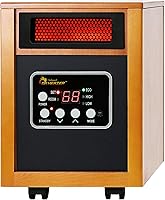
A space heater is a different infrared product and easy to confuse with a sauna. The DR.
INFRARED HEATER DR-968 is a 1500 watt portable space heater, not a sauna room, with tip over protection, overheat protection, and a 12 hour automatic shut off timer.
The DR-968 weighs 19 lb, uses 12.5 amps, and has a 72 inch power cord. It has an electronic thermostat from 50 to 85 degrees, an IR remote control, and caster wheels.
Those details suit a room heater, and they do not make it a sauna substitute.
Do not use a space heater inside a sauna room to raise the heat. That would defeat the timer and temperature controls built into a proper sauna and add fire and shock risks.
Use each product only for its intended purpose.
What are the infrared sauna use guidelines for safer sessions?
Use low heat, short time, water, and a quick exit when you feel unwell. Those four habits cover most of what matters for day to day safety.
Our full guide to infrared sauna use guidelines walks through setup, session length, and cool down steps. Read it before your first session, then follow the manual for your exact model.
Keep a towel, water, and your phone nearby outside the room. Tell someone at home that you will be in the sauna if you live alone.
A simple routine makes it easier to stop on time and cool down well.
Final thoughts on whether infrared saunas are safe
So, are infrared saunas safe? For most healthy adults, yes, when you start low, stay short, hydrate, and heed early warning signs.
The risk rises with high heat, long sessions, alcohol, and dehydration.
Pick a room with a timer and a low starting range if you are new to heat. Start at 10 to 15 minutes, build up slowly, and keep cleaning and cord checks in your routine.
If you have a heart condition or other health concerns, get medical advice first.
Frequently asked questions
Are infrared saunas safe for beginners?
Yes, beginners can use infrared saunas safely by starting at a low temperature, limiting the first sessions to 10 to 15 minutes, and hydrating before and after. Sit near the door, keep the timer visible, and get out if you feel dizzy, nauseated, or overheated.
What is the biggest risk of an infrared sauna?
The biggest risk is overheating, which can cause dizziness, nausea, or fainting, especially after alcohol, hard exercise, or a long session. Low heat, short sessions, water, and a cool exit help keep that risk down for most users.
Are infrared saunas safe for people with heart conditions?
People with heart conditions, low blood pressure, or fainting history should talk with a doctor first. Heat can change heart rate and blood pressure, so medical guidance matters more than the general safety picture for healthy adults.
How hot should an infrared sauna be for safety?
Many makers suggest starting near the low end of the range and staying at or below 130°F for early sessions. The X-Vcak room tops out at 150°F, so beginners should start well below that maximum and build up slowly.