9 Best Sauna Ventilation Fans (November 2026)
The best sauna ventilation fans include the VIVOSUN 4" Metal Inline Fan 100 CFM for small sauna rooms, the VEVOR 10'' Shutter Exhaust Fan for high-airflow wall exhaust, and the VIVOSUN 8" Metal Inline Fan 420 CFM for larger ducted setups.
On this page (9 sections)
- Best sauna ventilation fans for home saunas
- Best sauna ventilation fan comparison: airflow and placement
- How we compared these sauna ventilation fans
- What CFM should a sauna ventilation fan have?
- Which installation location works best for a sauna?
- How hot can a sauna ventilation fan handle?
- How quiet should a sauna ventilation fan be?
- What is included in the box, and what else may you need?
- Verdict: which sauna ventilation fan should you buy?
The best sauna ventilation fan for most home saunas is the VIVOSUN 4" Metal Inline Fan 100 CFM, because a compact inline fan can pull stale air through ducting without a large wall cutout. If your sauna room is larger, the 8" VIVOSUN or the Josmimic 6" inline fan gives you more airflow.
If you have direct exterior wall access, a shutter fan gives you stronger exhaust.
Our score weighs specs, features and buyer feedback against what you're shopping for. We compared the picks by airflow, installation location and temperature suitability.
We checked the specs, and we looked at what each fan includes in the box. We also separated true room exhaust fans from small cabinet fans, which can look similar in listings but solve a different problem in a sauna build.
Our picks at a glance
-
1

-
2

-
3
- 4
 Best for variable-speed wall controlCheck it
- 5
 Check it
Broan-NuTone Bathroom Exhaust Fan with Heater Quiet
Best for a combined fan and heater - 6
 Check it
Mdeinu 8 Inch Exhaust Fan with Speed
Best for wall mount with speed control - 7
 Check it
Eiovnur Waterproof Small 120V Cabinet Ventilation Exhaust
Best for small cabinets and enclosures - 8
 Check it
PANO-MOUNTS 172mmx51mm High-Speed Dual Ball Axial Ventilation
Best for humid equipment spaces - 9
 Check it
Josmimic 6" Inline Duct Fan & Speed
Best for stepless inline control
Start with sauna ventilation requirements before you pick a fan. The right CFM depends on room volume, duct length and where fresh air enters.
A fan that is too strong can make the room feel drafty. A fan that is too weak can leave heat and humidity hanging after you leave.
A sauna also adds heat that a normal bathroom or workshop fan may never see. That makes placement, motor type and stated temperature limits part of the sizing decision, not an afterthought.
Best sauna ventilation fans for home saunas
The top pick suits a small, ducted sauna room. The wall-mount picks suit rooms with an exterior wall.
The small axial picks suit cabinets, benches and equipment niches rather than the main room. Use the sections below to match the fan form to the space you actually have.
A ducted inline fan needs a duct path. A shutter fan needs a wall opening and a way to wire power.
A ceiling combo fan needs ceiling framing that matches its housing.
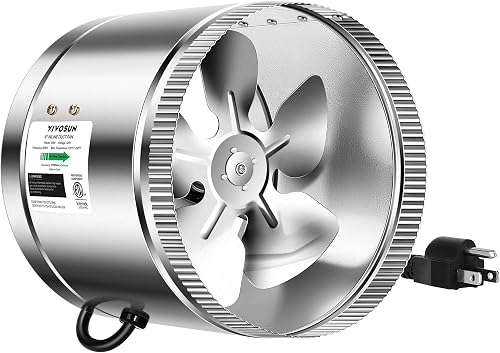
VIVOSUN 4" Metal Inline Fan 100 CFM: Best for small sauna rooms
- 4 inch diameter, 100 CFM
- 2930 RPM, 14W, 110/120V
- Metal body, under 30 dB
- Max ambient temp 140F
A compact inline fan for ducted exhaust in a small room. Its stated temperature limits make placement and sizing checks important.
Pros
- Compact duct-mounted design
- Low stated noise level
- Metal construction
Cons
- Modest 100 CFM airflow
- Max ambient temp is 140F
This fan suits a small home sauna with existing or planned 4 inch ducting. Its 100 CFM airflow is modest, but that can be an advantage in a small room where you want a gentle pull rather than a strong draft.
The metal body and permanently lubricated bearing are stated for long service with no maintenance. The balanced centrifugal impeller is stated for quiet operation.
VIVOSUN says noise stays under 30 dB, which is the lowest stated level among the inline picks here. The trade-off is temperature.
The stated max ambient temperature is 140F, and the max motor temperature is 266F. Place the fan outside the hottest zone and keep the duct path in mind.
It draws 14W at 110/120V and includes a cord. Clean it after the first week when used with a carbon filter, then clean it regularly based on use.
VEVOR 10'' Shutter Exhaust Fan: Best for high-airflow wall exhaust
- 10 inch, 820 CFM, 1650 rpm
- 45W, 120V/60Hz
- Galvanized steel frame, aluminum alloy fan
- 12.8 x 12.8 inch opening
A wall-mount shutter fan with much higher airflow than the inline picks. It needs a separate plug and switch for use.
Pros
- High 820 CFM airflow
- Shutter helps close the opening
- Metal frame and aluminum fan
Cons
- No speed control switch or plug included
- Large 12.8 inch cutout
This fan suits a larger sauna room or a space next to the sauna where you have a direct exterior wall. Its 820 CFM airflow is about eight times the 4 inch VIVOSUN, so it can clear air much faster.
The trade-off is size and wiring. You need a 12.8 x 12.8 inch opening.
The basic model does not include a speed control switch or plug, so you must buy and wire a separate plug for use. The frame is galvanized steel, the fan and shutter are aluminum alloy, and the motor has thermal protection and permanent lubrication.
VEVOR says the enclosed motor reduces noise and power use. At 45W and 1650 rpm, this is a strong pull.
Check that your wall can take the opening and that the fan location avoids the hottest air path. Plan for the extra wiring step before you order.
VIVOSUN 8" Metal Inline Fan 420 CFM: Best for larger ducted setups
- 8 inch diameter, 420 CFM
- 2970 RPM, 40W, 110/120V
- Metal body, under 40 dB
- Max ambient temp 140F
The bigger VIVOSUN inline fan moves far more air than the 4 inch version. It suits a larger sauna room with ducting to match.
Pros
- 420 CFM airflow
- Compact inline form
- Metal construction
Cons
- Higher stated noise than smaller model
- Max ambient temp is 140F
This fan suits a larger home sauna with 8 inch ducting. Its 420 CFM airflow sits between the small 4 inch inline fan and the big wall-mount fans.
That middle ground can help in a larger room without the large wall cutout a shutter fan needs. VIVOSUN says noise stays under 40 dB.
That is higher than the 4 inch model, so run it at the lowest speed that clears the room. The metal body and permanently lubricated bearing match the smaller model.
The balanced centrifugal impeller is stated for long service. Power draw is 40W at 110/120V.
The same temperature limits apply, with a max ambient temperature of 140F and a max motor temperature of 266F. Keep it out of the hottest zone.
The trade-off against the Josmimic is control. This VIVOSUN does not state an included speed controller, while the Josmimic does.
VEVOR 10'' Exhaust Fan: Best for variable-speed wall control
- 10 inch, 900 CFM, 1650 RPM
- 45W AC motor
- Included variable-speed controller
- Automatic shutter, steel build
A wall-mount fan with the highest airflow in this group and stepless speed control. The shutter opens when powered and closes when off.
Pros
- 900 CFM airflow
- Included speed controller
- Automatic shutter
Cons
- Large wall opening
- No stated max ambient temperature
This fan suits a sauna room with an exterior wall and a need for strong, adjustable exhaust. Its 900 CFM airflow is the highest in this group.
The included controller gives stepless variable speed, so you can start with a gentle pull and raise it after a session. The shutter opens when powered and closes when off, which helps block rain and small things when the fan is idle.
The steel build is stated for damp and rainy conditions, and it is also listed for indoor and outdoor use. At 45W and 1650 RPM, VEVOR says airflow can reach 7.4 m/s.
The package includes a user manual and expansion bolts. The trade-off is the wall opening and the lack of a stated max ambient temperature.
If you use this near heat, confirm temperature suitability from the brand before you install it.
Broan-NuTone Bathroom Exhaust Fan with Heater Quiet: Best for a combined fan and heater
- 80 CFM, 1.5 sones
- 1300-watt heater
- Dimmable LED with 3 CCT options
- Fits 2 x 6 inch ceiling construction
A ceiling-mount bathroom fan with heater and light functions. Its low airflow suits a small room rather than a large sauna.
Pros
- Fan, heater and light in one unit
- Functions work independently or together
- Compact ceiling fit
Cons
- Lowest airflow in this group
- No stated max ambient temperature
This unit suits a small sauna room that doubles as a bathroom or a small changing space. Its 80 CFM airflow is the lowest here, so it will not clear a large sauna room fast.
The value is the combo design. The fan, light and 1300-watt heater work independently or together.
The LED light is dimmable and offers warm white at 2700K, bright white at 3500K and daylight at 5000K. It also works as a nightlight.
The fan is rated at 1.5 sones, which is a clear way to compare sound with other fans. It fits 2 x 6 inch ceiling construction and has a galvanized steel housing.
The trade-off is scope. This is a bathroom fan first, so check temperature suitability for sauna use before you choose it.
If you mainly need exhaust, an inline or wall fan will move more air.
Mdeinu 8 Inch Exhaust Fan with Speed: Best for wall mount with speed control
- 8 inch, 700 CFM, 2600 RPM
- 80W, 110V, brushless motor
- Infinity speed controller
- Metal body, automatic closing valve
A compact wall-mount extractor with strong airflow and included speed control. Measure the opening carefully before you order.
Pros
- 700 CFM airflow
- Adjustable speed control
- Detachable design for cleaning
Cons
- No stated max ambient temperature
- Opening size must be measured
This fan suits a medium sauna room with a wall opening and a need for adjustable speed. Its 700 CFM airflow is strong, and the brushless motor runs at up to 2600 RPM with 80W use.
The infinity speed controller lets you tune airflow instead of running at full power all the time. The metal body is stated as resistant to corrosion, moisture and high temperature.
That wording helps, but it is not a stated max ambient temperature. The dense mesh guards the blades, and the automatic closing valve helps block insects or objects when the fan is off.
The design is detachable for cleaning grease and debris. The package includes a cord, installation kit and manual.
Measure the opening carefully, since the actual fan diameter is 7.5 inches. That check prevents a mismatch with a standard 8 inch opening.
Eiovnur Waterproof Small 120V Cabinet Ventilation Exhaust: Best for small cabinets and enclosures
- 130 CFM, 2500 rpm
- 3.5 watts, 110 volts
- 32 dB noise level
- IP67 waterproof, 5.5 x 5.5 x 1 inch
A small waterproof fan with a dial controller for cabinets and enclosures. It is a support fan, not a main sauna room exhaust.
Pros
- Small 5.5 inch size
- Waterproof design
- Stepless speed dial
Cons
- Low 130 CFM airflow
- Made for cabinets, not large rooms
This fan suits a small cabinet, plant cabinet, terrarium or equipment niche, not the main sauna room. Its 130 CFM airflow and 5.5 x 5.5 x 1 inch size make it a support fan for a small enclosed space.
The IP67 waterproof design is stated for humid hydroponic, greenhouse and terrarium use. A metal grille shields the blades.
The 3V to 12V speed controller gives stepless tuning, and a US plug adapter with an easy-turn dial lets you adjust speed or turn the fan off. Noise is stated at 32 dB and power use is 3.5 watts.
The trade-off is scale. At 2500 rpm and 130 CFM, it cannot replace a ducted exhaust fan for a full sauna room.
Use it to cool a bench enclosure or a small storage cabinet beside the sauna.
PANO-MOUNTS 172mmx51mm High-Speed Dual Ball Axial Ventilation: Best for humid equipment spaces
- 172 x 51 mm, 180 CFM
- 3300 rpm, 19.2 watts
- 40 dB noise level
- IP44 moisture-proof, aluminum housing
A square axial fan with adjustable speed for enclosed equipment spaces. Its moisture-proof rating suits humid areas, within its stated limits.
Pros
- 180 CFM from a square fan
- Adjustable speed
- Dual ball bearing design
Cons
- Equipment-focused form
- No stated max ambient temperature
This fan suits a humid equipment space or a small crawlspace-style niche near a sauna build. Its 180 CFM airflow is higher than the Eiovnur, and the 172 x 51 mm square form fits enclosed spaces where a round duct fan will not fit.
The aluminum housing and dual ball bearings are stated for durability. The IP44 rating is stated for water-splash or humid use up to 85% RH.
Stepless speed control is included. Noise is stated at 40 dB and power use is 19.2 watts at 3300 rpm.
The trade-off is form and scope. This is an axial equipment fan, not a wall exhaust fan or inline duct fan.
It has no stated max ambient temperature, so check suitability before you place it in a hot path. It is best where humidity and splash resistance matter more than ducted exhaust.
Josmimic 6" Inline Duct Fan & Speed: Best for stepless inline control
- 6 inch, 345 CFM
- 22 watts, EC motor
- Included stepless controller
- 30,000+ hours stated operating time
An inline duct fan with an EC motor and smooth speed control. Actual airflow depends on duct length, bends, filters and installation.
Pros
- 345 CFM airflow
- Stepless speed control
- EC motor design
Cons
- No stated max ambient temperature
- Airflow varies with duct setup
This fan suits a sauna room with 6 inch ducting and a need for smooth control. Its 345 CFM airflow is close to the 8 inch VIVOSUN, but the EC motor and included stepless controller help you run only as fast as needed.
Josmimic states more than 30,000 hours of reliable operation under normal conditions. Power use is 22 watts.
The trade-off is temperature data. No max ambient temperature is stated here, so you should confirm suitability for the hot side of your duct run.
Actual airflow can vary with duct length, bends, filters and installation. That note matters in a sauna, where a long duct run can cut real airflow.
Choose this if control matters more than raw CFM. It is a good fit when you want one inline fan to cover short sessions and longer cool-down runs.
Best sauna ventilation fan comparison: airflow and placement
The table below compares the main specs that change how each fan works in a sauna. Use airflow, size and power together.
A high CFM fan with a large cutout may not fit your build. Also match the fan form to the room.
Inline fans need ducting. Wall fans need an exterior opening.
Ceiling fans need framing. Cabinet fans need a small enclosed space.
The right pick depends on which of those paths your sauna already has.
| Product | Best for | Airflow | Size | Noise | Our score |
|---|---|---|---|---|---|
| VIVOSUN 4" Metal Inline Fan 100 CFM | small sauna rooms | 100 CFM | 4 inches | 30 dB | 9.7 |
| VEVOR 10'' Shutter Exhaust Fan | high-airflow wall exhaust | 820 CFM | 10 inches | 9.6 | |
| VIVOSUN 8" Metal Inline Fan 420 CFM | larger ducted setups | 420 CFM | 8 inches | 40 dB | 9.4 |
| VEVOR 10'' Exhaust Fan | variable-speed wall control | 900 CFM | 10 inches | 9.1 | |
| Broan-NuTone Bathroom Exhaust Fan with Heater Quiet | a combined fan and heater | 80 CFM | 1.5 sones | 8.9 | |
| Mdeinu 8 Inch Exhaust Fan with Speed | wall mount with speed control | 700 CFM | 8 inches | 8.6 | |
| Eiovnur Waterproof Small 120V Cabinet Ventilation Exhaust | small cabinets and enclosures | 130 CFM | 5.5 inches | 8.4 | |
| PANO-MOUNTS 172mmx51mm High-Speed Dual Ball Axial Ventilation | humid equipment spaces | 180 CFM | 172 mm | 8.1 | |
| Josmimic 6" Inline Duct Fan & Speed | stepless inline control | 345 CFM | 6 inches | 7.9 |
How we compared these sauna ventilation fans
We compared airflow first, because CFM sets how fast a fan can clear stale air. We also compared installation type, because inline, wall-mount and ceiling-mount fans need different openings and ducts.
We checked temperature suitability next, and only two picks state a max ambient temperature. Those two VIVOSUN models state 140F max ambient and 266F max motor temperature.
For the rest, we treated the lack of a stated limit as a question to confirm, not as proof of failure.
We looked at noise, power use and included controls. A fan with a speed controller can run quieter after a session.
A fan without one may need a separate switch or a run at full speed. We also checked what is in the box, so you know what else you may need to buy.
Cable length and plug type matter too, because a fan in a duct run or high on a wall may need a longer cord than a fan near an outlet.
How did we weigh controls and included parts?
We gave weight to included speed controllers because sauna use often needs two speeds. A low speed during a session and a higher speed after it can clear moisture without a cold draft.
We also checked included parts such as cords, manuals, bolts and installation kits. A fan that includes more parts can lower the extra cost and time of the install.
What CFM should a sauna ventilation fan have?
A small sauna room often works with a low CFM fan, while a large room needs more airflow. Start with room volume, then check duct size and duct length.
The 100 CFM VIVOSUN suits a small room. The 345 CFM Josmimic and 420 CFM VIVOSUN suit larger ducted rooms.
The wall-mount fans at 700 to 900 CFM suit large rooms or spaces where fast clearing matters more than a gentle pull.
How do you size airflow for your room?
Measure length, width and height, then multiply for volume. Use that volume with your ventilation plan to pick a CFM range.
A fan with too much CFM can pull in cold air and create a draft. A fan with too little CFM can leave the room stuffy.
Fresh air intake matters as much as exhaust. If supply air has no easy path in, even a strong fan will struggle to move air out.
Why can duct length change real airflow?
Long ducts and bends add resistance. The Josmimic notes that actual airflow varies with duct length, bends, filters and installation.
Keep the duct run short and straight where you can. Size the fan for the run you have, not the run you wish you had.
A booster-style inline fan in a long run may need a higher CFM model or a shorter path to meet the same air change goal.
Which installation location works best for a sauna?
Inline fans sit in ducting and keep the sauna wall cleaner. Wall-mount fans exhaust through an exterior wall and need a large cutout.
Ceiling-mount fans fit a bathroom-style layout and need ceiling construction space. Each path changes noise, heat exposure and wiring.
An inline fan can often sit outside the heated room. A wall fan sits in the wall line.
A ceiling fan sits in the ceiling plane.
When should you choose an inline fan?
Choose inline when you have duct access and want the fan outside the room. The VIVOSUN 4 inch and 8 inch models and the Josmimic 6 inch model fit this path.
Keep the fan out of the hottest zone where you can. Inline fans also make it easier to route exhaust to a preferred outside point.
That can help if the sauna wall is finished wood and you do not want a large grille in the room.
When should you choose a wall-mount shutter fan?
Choose wall-mount when you have an exterior wall and want direct exhaust. The VEVOR 10 inch models and the Mdeinu 8 inch model fit this path.
Measure the opening first. The VEVOR 10 inch models need a 12.8 inch opening.
A shutter helps close the opening when the fan is off. That matters for weather, insects and heat loss between sessions.
How hot can a sauna ventilation fan handle?
Temperature limits matter more than CFM in a sauna. Only the two VIVOSUN inline fans state a max ambient temperature of 140F.
Other picks do not state a max ambient temperature in the data we checked. That does not mean they cannot handle heat.
It means you should confirm suitability before you install them near heat. Motor type alone does not answer the question.
A brushless or EC motor may run efficiently, but the stated ambient limit still controls placement.
Where should you place the fan to reduce heat?
Place the fan low or away from the heater where your layout allows. Exhaust hot air that rises, but keep the fan motor out of the hottest path where you can.
Use ducting to move the fan to a cooler spot if your build allows it. A short pull from a high vent to a fan in a cooler duct space can protect the motor while still clearing the room.
What should you check before you order?
Check the stated max ambient temperature, the motor type and the installation type. Confirm that the power cord length and plug type fit your outlet.
The VIVOSUN models include a 5.5 foot cord. The Mdeinu has an 8.2 foot power cord.
Also check whether a speed controller is included. Adding a controller later can change cost and wiring, so it is easier to plan for it now.
How quiet should a sauna ventilation fan be?
Noise matters if your sauna is near a bedroom or living area. The VIVOSUN 4 inch fan states under 30 dB.
The Eiovnur states 32 dB. The VIVOSUN 8 inch and PANO-MOUNTS state 40 dB.
The Broan-NuTone states 1.5 sones, which is a different scale. Sones and decibels are not directly interchangeable, so use each rating to compare within its own scale.
A fan that sounds fine in a garage may be noticeable in a quiet house at night.
How does speed control help with noise?
A speed controller lets you run a strong fan at low speed after a session. The VEVOR 10 inch black model, Mdeinu, Eiovnur, PANO-MOUNTS and Josmimic include speed control.
The VEVOR silver shutter fan does not include a speed control switch. Lower speed usually means lower noise and less draft.
That makes a high CFM fan more flexible in a small sauna room.
Should you run the fan during your sauna?
Run a low speed during your session if you want steady air movement. Run a higher speed after you leave to clear heat and humidity.
A controller helps you make that change without a wiring project. Short post-session runs can also help dry wood surfaces and reduce lingering odor.
Longer runs use more power and may bring in cold outdoor air.
What is included in the box, and what else may you need?
Some fans need only ducting and a cord. Others need a plug, a switch or a controller.
The VEVOR silver shutter fan needs a separate plug and switch. The VEVOR black shutter fan includes a controller, manual and expansion bolts.
The Mdeinu includes a cord, installation kit and manual. The VIVOSUN inline models include a cord.
The Josmimic includes a controller. Check the included list for your exact model before you buy extra parts.
What should you buy with the fan?
Buy ducting, clamps and a wall cap or exterior vent where your layout needs them. Buy a plug or switch if the fan does not include one.
Buy a controller if you want variable speed and the fan does not include one. If you cut a wall opening, plan for sealing and flashing around the frame.
A neat seal helps with weather, noise and heat loss.
How should you clean a sauna ventilation fan?
Clean the fan regularly based on use. VIVOSUN says to clean after the first week when used with a carbon filter, then clean regularly based on use.
The Mdeinu has a detachable design for cleaning. Turn power off before you clean any fan.
Dust and moisture can build up faster in a sauna than in a normal room. A simple cleaning schedule can keep airflow and sound close to the stated specs.
Verdict: which sauna ventilation fan should you buy?
Pick the VIVOSUN 4" Metal Inline Fan 100 CFM if you have a small sauna room with 4 inch ducting. Pick the VIVOSUN 8" Metal Inline Fan 420 CFM if you have a larger room with 8 inch ducting.
Pick the Josmimic 6" Inline Duct Fan if you want stepless control in an inline setup. Each of these three keeps the sauna wall free of a large grille.
Each also lets you place the fan away from the hottest air, within the stated limits.
Pick a VEVOR shutter fan if you have an exterior wall and want high airflow. Pick the Mdeinu 8 Inch Exhaust Fan if you want strong wall-mount airflow with included speed control.
Pick the Broan-NuTone if your sauna room doubles as a bathroom and you want heat and light in one unit. Use the Eiovnur or PANO-MOUNTS only for a cabinet or equipment niche.
Before you order, recheck our sauna ventilation requirements guide and confirm temperature suitability for your fan location.
Our top 3 picks at a glance
-
1
-
2
-
3
Frequently asked questions
How much airflow does a home sauna need?
Use our sauna ventilation requirements guide to plan air changes for your room size. Then compare fan CFM with your duct size and room volume.
A fan with high CFM on paper can move less air through long or bent ducts.
Can a bathroom exhaust fan ventilate a sauna?
A bathroom fan can work in a small room if its CFM and temperature limits fit the job. The Broan-NuTone here moves 80 CFM and adds heat and light.
Check ceiling construction and temperature suitability before using it as sauna exhaust.
Inline or wall-mount fan for a sauna?
Inline fans sit in ducting and suit a cleaner wall finish. Wall-mount shutter fans exhaust directly through an exterior wall.
Choose by duct access, exterior wall access and the opening size you can cut.


