Gas vs Electric Sauna: Which Should You Choose? (November 2026)
Choose an electric sauna for simpler indoor installation and precise controls, or gas for an outdoor sauna with stronger fuel flexibility. Your location, ventilation plan and available utility connections should decide the heating system.
On this page (7 sections)
Choose an electric sauna for simpler indoor installation and precise controls, or gas for an outdoor sauna with fuel flexibility. The gas vs electric sauna decision depends on where the sauna will sit, which utilities are available and how much installation work you can support.
Your first question should be about placement rather than heat style alone. An indoor bedroom, basement, garage or home gym has different limits from a detached outdoor structure.
The heating system has to fit those limits, not the other way around.
Gas heaters burn natural gas or propane and need fuel lines, combustion air and exhaust planning. The tank or line, heater, chimney route and clearances all need to work together, and a qualified installer should confirm the set is safe for the exact building and heater.
Electric heaters usually offer simpler temperature and session controls, especially indoors. Smaller units may use a standard outlet, while larger traditional heaters may need dedicated wiring, so check the manual and power requirements before measuring the room.
This comparison also includes compact electric and portable sauna options. They are not direct replacements for every traditional gas or electric heater, but they show the range of home setups when you compare space, heat style and installation needs.
A fixed infrared cabin heats people directly at lower air temperatures than a traditional sauna room. That can suit beginners who want a shorter, gentler session and a timer that keeps the routine simple, though the cabinet itself needs indoor floor space and ceiling clearance.
The X-Vcak 1-2 Person Infrared Sauna is an example of that compact electric approach. It uses 1450W power, 6 heating panels and a 40 x 36 x 73 in footprint, with a timer from 1 to 99 minutes and a recommended usage time of 10 to 15 minutes.
The Dynamic Saunas Barcelona shows a different fixed cabin option in Canadian hemlock wood. It has 6 carbon infrared panels, an interior of 36 x 32 x 67 in and a standard 15-amp, 120-volt plug, and it is designed for indoor use with assembly in about one hour.
Portable steam models sit at the other end of the commitment scale. The X-Vcak Upgraded Portable Sauna weighs 16.24 pounds and includes a high-power steamer, remote control and folding chair, so it can move between rooms but still needs water, warm-up time and drying after use.
For weekly use, the care routine matters as much as the heater type. Electric controls can make timing and temperature easier to repeat, while gas demands stricter attention to fuel and exhaust safety.
Measure doorways, ceiling height, floor level and electrical access, and allow room for clearances and ventilation. A smaller electric cabin may fit a corner that a gas heated building could never use indoors.
A weekly routine should also reflect simple details such as short beginner sessions, drinking water before and after use, and keeping the sauna dry and ventilated after steam sessions.
 Best for compact indoor infrared heat
X-Vcak 1-2 Person Infrared Sauna
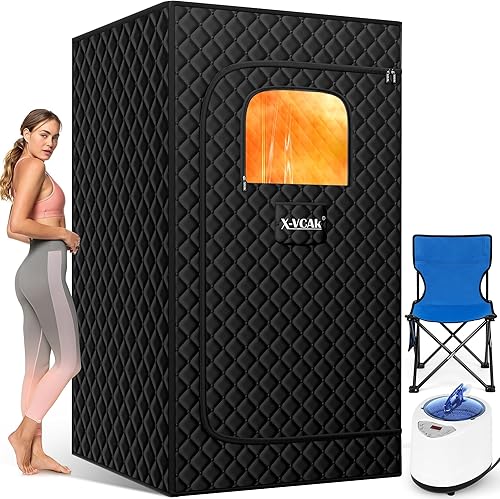 Best for portable steam sessions
X-Vcak Upgraded Portable Sauna for Home,Relaxation
Gas vs electric sauna: which heating system is easier to install?
Electric is usually easier to install indoors, while gas needs a complete fuel and venting plan. The heater type affects more than the heat source because it changes the work required around the sauna room.
An electric setup may need only a suitable outlet for a small infrared unit. Larger electric sauna heaters can require a dedicated circuit, so confirm the power requirement before planning the room.
A gas setup needs a compatible fuel supply, a combustion-air path and an exhaust route. Natural gas and propane are not interchangeable unless the heater is designed and configured for the fuel you plan to use.
Read gas sauna heaters: how to choose fuel type and size before comparing models. Fuel type and heater size should match the room, the available utility connection and the installation location.
What does an electric sauna need?
An electric sauna needs a suitable power connection, a level installation area and the clearances required by its heater or cabin. Smaller units can fit into a room with fewer building changes, but the outlet still needs to support the load safely.
The Dynamic Saunas Barcelona uses a standard 15-amp, 120-volt plug. It assembles indoors on surfaces that include carpet, and its design suits buyers who want a fixed 1-2 person infrared cabin.
The X-Vcak 1-2 Person Infrared Sauna uses 1450W power and has 6 heating panels. Its 40 x 36 x 73 in size makes doorway and ceiling measurements important before assembly.
For a smaller electric setup, see what an electric sauna is and how plug-in heat works. The article can help you separate a plug-in infrared cabin from a higher-load traditional electric heater.
What does a gas sauna need?
A gas sauna needs safe fuel delivery, combustion air and exhaust ventilation designed for the exact heater. These requirements make gas more installation-dependent than a portable or plug-in electric sauna.
Natural gas can be convenient when a suitable line is already near the sauna location. Propane can provide more placement flexibility, but the tank, regulator, fuel line and heater must all be compatible.
A gas heater also needs enough clearance from wood and other materials. Follow the heater manual and local requirements, and use a qualified professional for gas connections and venting.
A two-person room does not automatically need a small heater. Compare the room volume and heater requirements in can a gas sauna heater fit a two-person sauna?.
Which system works better indoors?
Electric is the better fit for most indoor home sauna rooms because it avoids indoor fuel storage and combustion exhaust. A fixed infrared cabin or portable electric sauna can also fit more easily into a bedroom, basement, home gym or wellness room.
The Dynamic Saunas Barcelona is designed for indoor use and has a 1-2 person layout. Its 6 carbon infrared panels operate up to 135°F, with a recommended comfort range between 115°F and 130°F.
The X-Vcak 1-2 Person Infrared Sauna reaches up to 150°F and includes a 1-99 minute timer. It also has Bluetooth, MP3 and radio functions, plus 7 therapy light colors.
Portable units can reduce the commitment of a fixed cabin. The X-Vcak Upgraded Portable Sauna uses a high-power steamer, remote control, folding chair and 9 levels, so it suits buyers who want to move the setup between rooms.
Is gas better for an outdoor sauna?
Gas can suit an outdoor sauna when electrical capacity is limited and a safe fuel connection is practical. Outdoor placement can make exhaust planning easier, but it does not remove the need for proper clearances, ventilation and weather protection.
Natural gas works best when the property already has a suitable line near the sauna. Propane can help where natural gas is unavailable, but tank placement and refill access become part of the plan.
The sauna building also needs a suitable route for the flue or exhaust system. Keep the heater, chimney and fuel components away from materials and locations that the manual prohibits.
Read what to consider before choosing a propane outdoor sauna before choosing a fuel source. For a do-it-yourself plan, can you build a DIY propane sauna heater? explains why fuel and ventilation details need careful attention.
How do gas and electric controls compare?
Electric heaters usually offer more direct temperature and session controls, while gas systems depend more on the heater design and fuel controls. Both systems need controls placed where you can use them without entering an unsafe area.
The X-Vcak 1-2 Person Infrared Sauna has a 1-99 minute timer and a temperature range of 66°F to 150°F. It also includes Bluetooth, MP3 and radio functions with 2 speakers.
The Dynamic Saunas Barcelona includes easy LED controls, Bluetooth and MP3 Aux input. Its infrared system reaches up to 135°F, which is different from the higher-air-temperature experience of a traditional sauna.
The portable X-Vcak steam sauna lets you set temperature and time on the steamer or with its remote control. The KASUE also includes a remote control for heat levels and session time, along with dual zippers and a transparent window for airflow.
Which option is easier to use every week?
Electric infrared and portable systems usually take less preparation for short indoor sessions, while gas can suit a permanent outdoor sauna used on a regular schedule. Your routine matters as much as the heating system.
The X-Vcak infrared cabin has a recommended usage time of 10 to 15 minutes. Its timer helps limit a session, and the 40 x 36 x 73 in enclosure stays in place once assembled.
The Dynamic Saunas Barcelona is also a fixed 1-2 person cabin. Its assembly takes about one hour, and its indoor-only design keeps the placement decision focused on room space, floor level and electrical access.
Portable steam units add water handling and drying. The X-Vcak includes a waterproof folding chair, while the KASUE uses two 3L steam generators and a water-resistant outer surface that can be wiped clean after the unit cools.
Keep the sauna dry and ventilated after steam sessions. Follow the heater or sauna manual for cleaning, electrical checks and any required service.
What are the main trade-offs?
Gas gives you fuel flexibility for some outdoor installations, while electric gives you simpler indoor planning and broader control choices. Neither system is automatically better for every home.
The trade-off starts with location. Gas suits an outdoor structure where fuel storage, combustion air and exhaust can be planned without bringing them into living space.
Electric suits an indoor room where avoiding fuel lines and a chimney matters more than fuel choice.
Choose gas when you already have a suitable outdoor location, a practical natural gas or propane plan and room for professional venting. Natural gas can be convenient where a suitable line is already near the sauna building.
Propane can offer more placement flexibility where no line exists, but tank access, refill space and line routing become part of the design, and neither fuel should be assumed interchangeable with the other.
Choose electric when the sauna will sit indoors and you want a simpler path to heat, timing and routine use. A small infrared cabin can use a standard outlet, while a larger electric heater may need dedicated wiring, so confirm the power requirement before ordering.
Small infrared cabins and portable steam units can also avoid the construction work of a traditional sauna room. That lower-commitment route suits renters, spare rooms and gyms where permanent building changes are not wanted, though the heat feel differs from a traditional heater.
A fixed electric infrared cabin suits buyers who want a permanent indoor setup with wood construction and repeatable sessions. The Dynamic Saunas Barcelona, for example, uses Canadian hemlock wood and 6 carbon infrared panels, with a maximum temperature of 135°F and a recommended comfort range between 115°F and 130°F.
That temperature limit is an honest trade-off for infrared heat. Infrared panels warm the body directly, so a lower air temperature can still feel strong during a session, and beginners are advised to start with low temperatures and short sessions.
The X-Vcak 1-2 Person Infrared Sauna reaches 150°F and has a 1-99 minute timer. It includes Bluetooth, MP3 and radio functions, plus 7 therapy light colors and 6 heating panels, and its 40 x 36 x 73 in size still needs indoor floor space and careful doorway planning.
Portable electric heat suits people who value storage and room changes over a fixed cabin feel. The X-Vcak portable steam sauna weighs 16.24 pounds and includes a remote control, folding chair and 9 levels, while steam adds water handling and drying time after each session.
Gas also carries ongoing care and safety duties that electric does not, and the right choice is a fixed cabin for a wood interior, portable when flexibility matters more, and gas only when the outdoor site, fuel access and professional installation all align.
Gas vs electric sauna: which should you choose?
Pick electric for an indoor home sauna, simpler controls and easier planning around an existing room. Pick gas for an outdoor sauna only when fuel access, venting and professional installation fit the site.
Start by matching the system to the room you already have. An indoor sauna needs a level floor, suitable electrical access and enough ventilation for comfort.
An outdoor sauna needs weather protection, safe clearances and a proper route for fuel and exhaust.
For compact indoor infrared heat, the X-Vcak 1-2 Person Infrared Sauna combines 6 heating panels with 1450W power and a 1-99 minute timer. It heats to a maximum of 150°F and includes Bluetooth, MP3 and radio functions with two speakers, and its 40 x 36 x 73 in cabinet suits a 1-2 person indoor space.
That X-Vcak also includes 7 therapy light colors, a bookshelf, a towel rack and a cup holder. A ventilation hole at the top helps fresh air flow during a session, and the tempered glass door and three-prong plug are part of its safe design for indoor home use.
For a fixed wood cabin, the Dynamic Saunas Barcelona offers Canadian hemlock construction and 6 carbon infrared panels. It fits 1-2 adults with an interior of 36 x 32 x 67 in and operates up to 135°F, using a standard 15-amp, 120-volt plug and assembling indoors in about one hour.
The Barcelona includes LED controls, Bluetooth, MP3 Aux input and built-in speakers with a pre-amp. Its recommended comfort range is between 115°F and 130°F, and that lower maximum is a trade-off because infrared heat warms the body directly rather than relying on very hot air.
If portability matters, the X-Vcak portable steam sauna and KASUE two-person portable sauna offer folding formats with remote controls. The X-Vcak weighs 16.24 pounds and includes a high-power steamer, a waterproof folding chair and 9 levels, so it can move between rooms but needs water and drying time.
The KASUE 2 Person Portable Infrared Sauna measures 71 x 49 x 36 in and includes two folding chairs. It uses two 3L steam generators and a 5-layer insulated construction for shared sessions, while its remote control, dual zippers and transparent window help with access and airflow.
Both portable options need a dry, level and ventilated indoor area and a place to store them when folded. The KASUE has a water-resistant outer surface that can be wiped clean after the unit cools, and that care routine is simpler than building a fixed room but still part of weekly use.
Gas remains an option for a permanent outdoor sauna where fuel and venting can be installed safely. Natural gas and propane each need compatible equipment, clearances and professional work for lines and exhaust, and without that outdoor plan gas adds complexity without a clear benefit.
The right choice matches your location, fuel plan, electrical capacity and care routine, so choose electric for most indoor homes, a fixed infrared cabin for a permanent indoor room, and portable electric heat when storage matters.
Frequently asked questions
Is gas or electric better for a home sauna?
Electric is usually the simpler choice for an indoor home sauna because it avoids fuel storage and gas venting. Gas can make more sense for an outdoor sauna when you already have a suitable natural gas or propane connection and can install the heater, chimney and ventilation safely.
Does a gas sauna need ventilation?
Yes. A gas sauna heater burns fuel, so the room needs a safe combustion-air and exhaust plan designed for that heater and building.
Never treat a gas heater like an electric unit, and use a qualified installer for fuel lines, venting and carbon monoxide safety.
Does an electric sauna need special wiring?
Some electric sauna heaters need dedicated wiring, while smaller infrared units may use a standard outlet. The Dynamic Saunas Barcelona uses a standard 15-amp, 120-volt plug, while the correct circuit for another heater depends on its power requirements and installation manual.
Can you use propane for an outdoor sauna?
Propane can work for an outdoor sauna when the heater is designed for propane and the fuel, venting and clearances are installed correctly. Review what to consider before choosing a propane outdoor sauna before deciding where the heater and tank will go.
Are portable infrared saunas electric?
Portable infrared saunas use electric heating and controls, but they are different from a fixed electric sauna room. The X-Vcak 1-2 Person Infrared Sauna has 6 heating panels and 1450W power, while the KASUE combines infrared light with two 3L steam generators.


