Infrared Sauna vs Red Light Therapy: Which to Choose? (October 2026)
Choose an infrared sauna for a heated cabin session and a dedicated red light device for targeted light sessions without sauna heat. An infrared sauna vs red light therapy choice depends on which experience you want and how much space you can set aside.
On this page (7 sections)
Choose an infrared sauna for a heated cabin session and a dedicated red light device for targeted light sessions without sauna heat. The infrared sauna vs red light therapy choice depends on the experience you want, the area you want to expose and the space available at home.
These options are related, but they do different jobs. A sauna creates a warm enclosure; a panel or face mask sends light toward a selected area.
If you want both features together, look for a cabin that names red light therapy as an included feature. Our guide to an infrared sauna with red light therapy explains what to check.
 Best for a home sauna routine
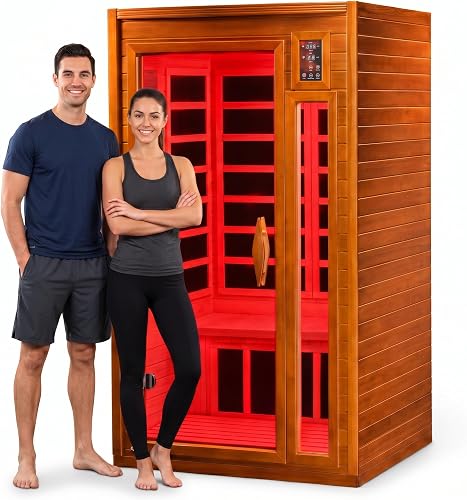
Dynamic Saunas Barcelona 1-2 Person Infrared Sauna
 Best for two-person cabin space
JNH Lifestyles Joyous+ 170°F 2-Person Infrared Sauna
Infrared sauna vs red light therapy: what is the difference?
An infrared sauna is a heated room-sized product, while red light therapy usually means a panel or wearable device aimed at a specific area. The main difference is the format and the role of heat.
Infrared sauna heaters emit invisible infrared light that warms the cabin and your body. Dedicated red light devices use visible red wavelengths, often with near-infrared, and don't create the same seated cabin environment.
The word “infrared” appears in both categories, which can make them sound interchangeable. It describes a part of the light spectrum, not a shared function.
Is an infrared sauna red light therapy?
No, infrared sauna heat is not automatically red light therapy. Some cabins include chromotherapy lights, but the feature name and specifications should say whether the system provides red light therapy.
A cabin can still be a good fit if your main goal is a warm session. If targeted light is the priority, compare devices designed around that use, such as panels and face masks.
For a plain explanation of the sauna format, read what an infrared sauna is. Our guide to how an infrared sauna works covers the heating side.
Which option fits your goal?
Choose a sauna for warmth and a dedicated light device for a specific treatment area. Neither format is a substitute for the other simply because both use light.
A sauna may suit you if you want to sit inside a warm cabin as part of a regular home routine. Dedicated red light equipment suits you if you want a smaller device aimed at your face or another selected area.
Choose an infrared sauna if you want cabin heat
The Dynamic Saunas Barcelona is a 1- to 2-person cabin with six carbon infrared panels, chromotherapy lighting and a maximum temperature of 135°F. It measures 36 x 32 x 67 inches and uses a standard 15-amp, 120-volt plug.
The JNH Lifestyles Joyous+ is designed for two adults and reaches up to 170°F. Its eight carbon fiber far infrared heaters and chromotherapy lights make it a fit for shoppers prioritizing a larger shared cabin.
Room size and setup matter more than the name of the light feature. Measure the full installation area and check the required electrical setup before choosing a cabin.
Choose a red light device if you want targeted sessions
A panel or mask takes less room than a sauna cabin and can focus on a particular area. It won't provide a sauna's warm enclosure, so decide whether that missing heat is acceptable.
The Viconor panel combines 660 nm red and 850 nm near-infrared LEDs. Its stand adjusts in angle and height, and the panel can also hang independently.
The iRestore mask is designed for the face and includes red, infrared and blue wavelengths. Its suggested routine is 10-minute sessions, 3 to 5 times a week.
These products have different coverage and setup needs, so compare the device shape with your intended routine. For more options, browse our best red light sauna guide.
How does sauna heat compare with a red light session?
A sauna session warms your body in a heated cabin; a red light session directs light at a selected area. Consider the full experience, including how you prepare, where you sit and how much equipment you need.
The Barcelona has a recommended comfort range of 115°F to 130°F and operates up to 135°F. The Joyous+ reaches up to 170°F, giving it a higher stated maximum.
A light panel or mask doesn't require you to heat an enclosure. That can make it easier to fit a short session into a room where a cabin won't fit.
Neither product format guarantees a particular health or skin result. Device instructions, session consistency and individual needs affect what is appropriate for you.
How do coverage and session setup differ?
A sauna surrounds you with cabin heat, while a panel or mask needs to be positioned for its intended area. Think through how much of your body you want to include and how much setup you will tolerate.
A seated cabin provides a single place for the session, but it needs permanent floor space and an appropriate outlet. A panel can be moved or adjusted, while a face mask is wearable and limited to the face.
The Viconor panel's 180° adjustability may help with positioning, but it remains a standalone light device. The iRestore is a mask format, which means your session is face-focused rather than full-body.
If you are comparing cabin types, see near vs far infrared sauna and full spectrum sauna vs far infrared. Those guides help separate sauna heating styles from dedicated light devices.
How much space and setup does each require?
A dedicated light device is the smaller-format choice; a sauna needs a clear area for its cabin and access. Check measurements and installation instructions before deciding.
The Barcelona cabin measures 36 x 32 x 67 inches. The Joyous+ is larger at 47.3 x 39.5 x 75 inches and weighs 303 pounds, so plan the route into the room as well as the final location.
A panel and a face mask are more portable by design, though they still need storage and a usable power source. The Viconor includes a stand and a 3 m power cord, while the iRestore is a 1.87 lb wearable mask.
Don't assume a cabin will work in any room because it uses a standard plug. Check floor support, outlet access, ventilation and the manufacturer's installation guidance for the specific model.
Can a sauna include red light therapy?
Yes, some infrared sauna models combine cabin heat with lighting features, but you need to verify what the named light feature does. “Chromotherapy” and “red light therapy” aren't always used to mean the same system.
The Dynamic Barcelona and JNH Joyous+ descriptions include chromotherapy lights. If red light therapy is the reason you're shopping, read the feature details for the exact model and confirm that it matches your needs.
A combined cabin can reduce the number of separate devices in your routine. It also costs room and setup space that a standalone panel or mask does not require.
For options that pair these functions, compare our best far infrared sauna with red light therapy and infrared sauna with red light therapy guide.
Which should you choose?
Pick an infrared sauna if cabin warmth is central to your routine; pick a red light panel or mask if targeted light and compact storage matter more. Choose a combination cabin only when you want both functions and have room for the larger setup.
The Barcelona fits a smaller 1- to 2-person cabin plan, while the Joyous+ is designed for two people and offers a higher maximum temperature. The Viconor is an adjustable panel for targeted placement, and the iRestore is a wearable option for face-focused sessions.
If heat is the deciding factor, compare near and far infrared sauna types before settling on a cabin. If the light device is the main goal, start with the dedicated red light options and choose the form you can use consistently.
Frequently asked questions
Is an infrared sauna the same as red light therapy?
No. An infrared sauna uses infrared heaters to warm the cabin and your body, while a dedicated red light device directs light at a chosen area.
Some sauna cabins include chromotherapy lighting, but that doesn't make them the same as a red light panel or mask.
Does an infrared sauna use red light?
An infrared sauna uses invisible infrared wavelengths for heat. Some models also include chromotherapy lights, which are a separate feature.
Check whether a cabin specifically includes red light therapy if that capability matters to you, since the terms aren't interchangeable.
Which is better for full-body coverage?
An infrared sauna surrounds you with cabin heat during a seated session. A red light panel can be positioned for different areas, but you may need to reposition it for broader coverage.
Choose based on whether you want whole-cabin warmth or targeted light exposure.
Can you use red light therapy in a sauna?
Some sauna cabins combine infrared heat with chromotherapy or red light features, while others focus on heat alone. Check the exact lighting features before buying, and follow the cabin and device instructions for session length and use.
What should you wear in a red light sauna?
Wear what feels comfortable and follow the sauna maker's instructions. If you want light to reach skin, clothing can block some exposure, but comfort, privacy and the device guidance matter.
See our guide to what to wear in a red light sauna.